
Morris County Probate Records
Morris County probate court records are maintained at the Surrogate's Court in Morristown. The county was formed on March 15, 1739 from Hunterdon County. The Surrogate's Court handles all estate filings, will probates, and guardianship matters for the county. You can search for probate court records in Morris County online through the Surrogate's website or in person at the courthouse. Records cover estates from 1804 to the present day. Earlier records are held in Hunterdon County, where Morris County originated.
Morris County Quick Facts
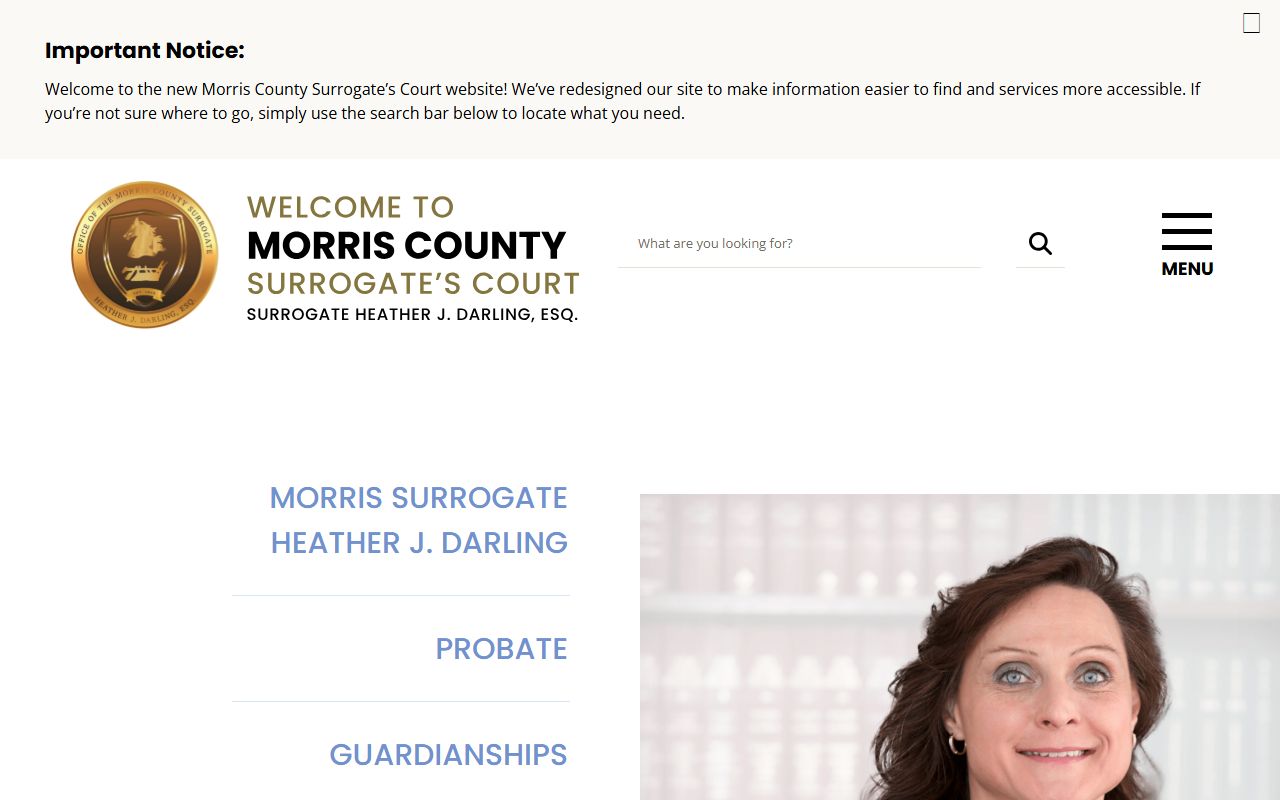
Morris County Surrogate's Court
The Morris County Surrogate's Court is the office that manages all probate court records in the county. Staff can help you file a will for probate, request copies of estate documents, or search for old case files. The court sits in Morristown, the county seat. Walk-in visits are welcome on business days.
Morris County was carved from Hunterdon County in 1739. This means that estate records before that date are held in Hunterdon, not Morris. Once Morris County began its own record keeping, probate court records were maintained at the Surrogate's Court in Morristown. The office serves all towns in the county, including Parsippany-Troy Hills, Morristown, Dover, Randolph, and Denville.
The Morris County Surrogate's Court official website provides details on services, forms, and office hours.
You can reach the office by phone or through the website for questions about probate court records in Morris County.
| Court |
Morris County Surrogate's Court Morristown, NJ |
|---|---|
| Hours | Monday through Friday, 8:30 AM to 4:30 PM |
| Website | morrissurrogate.com |
Morris County Online Probate Court Records Search
Morris County offers an online estate search tool. This is one of the better digital tools among New Jersey surrogate offices. The database covers estates from 1804 to the present. You can search by name, file number, or date range. This makes it easy to find probate court records in Morris County without visiting the office.
Go to morrissurrogate.com to start a search. The tool is free to use. Enter the last name of the person who died and the system returns matching cases. You can narrow results by date if the name is common. Each result shows the case type, file number, and date. For copies of the actual documents, you will need to contact the Morris County Surrogate's Court directly.
The online search tool is a good first step for anyone looking for probate court records in Morris County. It can tell you whether a case exists before you make a trip to Morristown or request copies by mail.
Note: The online database covers Morris County probate court records from 1804 forward. For records before that date, check Hunterdon County.
Morris County Probate Filing Process
Filing for probate in Morris County follows the same steps as in all New Jersey counties. The process is simple. Most people finish in under an hour. You can walk in on any business day between 8:30 and 4:30.
Under N.J.S.A. 3B:3-22, there is a 10-day wait after the date of death before a will can be filed for probate. This law applies in Morris County and across the state. Once those 10 days pass, you bring the will and other papers to the Surrogate's Court. The filing process under N.J.S.A. 3B:3-19 then begins. The court reviews the will and issues letters testamentary to the named executor if all is in order.
If someone dies without a will, a family member can file for letters of administration under N.J.S.A. 3B:10-1. The Morris County Surrogate's Court handles these cases the same way. For small estates, N.J.S.A. 3B:10-3 and N.J.S.A. 3B:10-4 offer a shorter process with fewer steps. Each filing creates probate court records that the Morris County office keeps on file.
- The original will
- A certified death certificate with a raised seal
- Names and addresses of all beneficiaries
- Next-of-kin information
- Two forms of identification
Historical Probate Court Records in Morris County
The New Jersey State Archives holds a wide collection of old Morris County probate court records on microfilm. These are valuable for legal and genealogical research. The holdings span from 1740, the year after the county was formed, through the early 1900s.
The State Archives collection for Morris County probate court records includes Will Books from 1740 to 1922 and Indexes from 1740 to 1970, Orphans Court records from 1740 to 1902, Administration Bonds from 1861 to 1902, Letters of Administration from 1804 to 1900, Guardian Bonds from 1861 to 1904, Divisions from 1791 to 1901, and Dockets from 1740 to the 1950s. These records cover nearly every type of estate filing that passed through the Morris County Surrogate's Court over two centuries.
The Morris County State Archives page shows the full list of available microfilm reels.
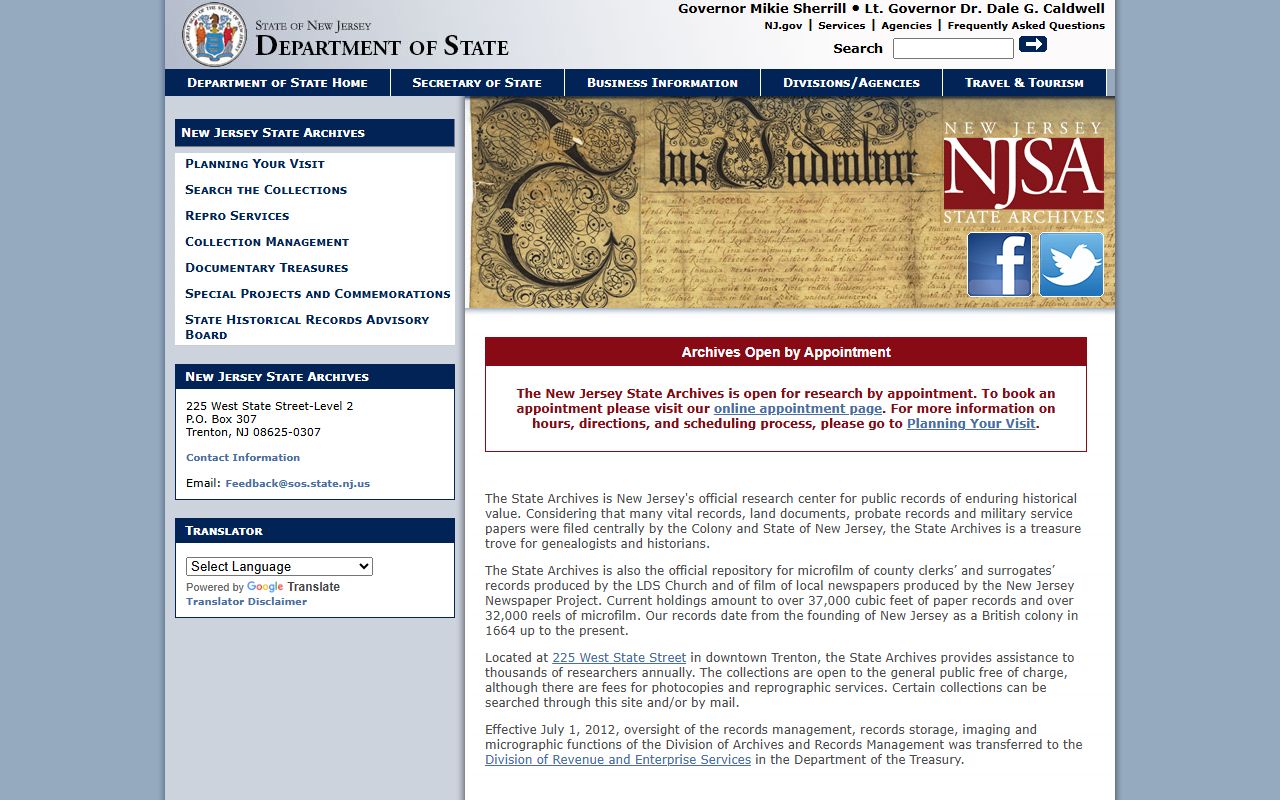
You can view these records at the State Archives in Trenton or request copies by mail. The State Archives searchable database can help you find specific Morris County probate court records before you visit.
Note: The Will Books starting in 1740 are among the earliest probate court records for Morris County. These predate the county's own recorded wills, which begin in 1804.
Morris County Records Before 1739
Morris County was formed from Hunterdon County on March 15, 1739. Before that date, all estate matters for the area were handled by the Hunterdon County Surrogate's Court. If you are searching for probate court records from the early 1700s for someone who lived in what is now Morris County, you need to check Hunterdon County records.
The State Archives holds Hunterdon County probate court records that cover the pre-1739 period. These may include wills, administrations, and estate papers for residents of the Morris County area before it became its own county.
Types of Morris County Estate Cases
The Morris County Surrogate's Court handles several types of cases. Each type creates its own set of probate court records.
Will probate is the most common type. This is when someone dies with a valid will and the court reviews it. The court grants authority to the executor named in the will. Letters of administration apply when there is no will. The court appoints an administrator based on state law. Guardianship cases involve care for a minor child or an incapacitated adult. Estate accountings, where the executor reports how estate funds were used, are filed here as well. All of these case types create probate court records that the Morris County Surrogate's Court maintains.
The New Jersey Courts website has forms and guides for people who need to file any of these case types in Morris County.
Probate Court Records and New Jersey Law
New Jersey probate law governs how the Morris County Surrogate's Court operates. The main body of law is Title 3B of the New Jersey Statutes. These laws set the rules for wills, estates, trusts, and guardianships. The New Jersey Legislature website has the full text of all statutes.
Morris County follows the same rules as every other county. Probate court records in Morris County are generally public. Anyone can request copies. Some guardianship and adoption files may have restricted access. The Surrogate's Court in Morristown applies these laws when it reviews wills, grants letters, and creates probate court records for Morris County estates.
Note: Probate court records in Morris County are subject to the Open Public Records Act, which means most documents are available to anyone who asks.
Municipalities in Morris County
Morris County has 39 municipalities. All of them file probate matters at the Morris County Surrogate's Court in Morristown. Major towns include Parsippany-Troy Hills Township, Morristown, Dover, Randolph, Denville, Roxbury, and Mount Olive. No matter which town you live in, probate court records for Morris County estates are all kept at the Surrogate's Court in Morristown.
Nearby Counties
These counties border Morris County. If you are not sure which county handles your probate case, check the address where the person who died lived. You must file in the correct county for the Surrogate's Court to have jurisdiction over the estate.